



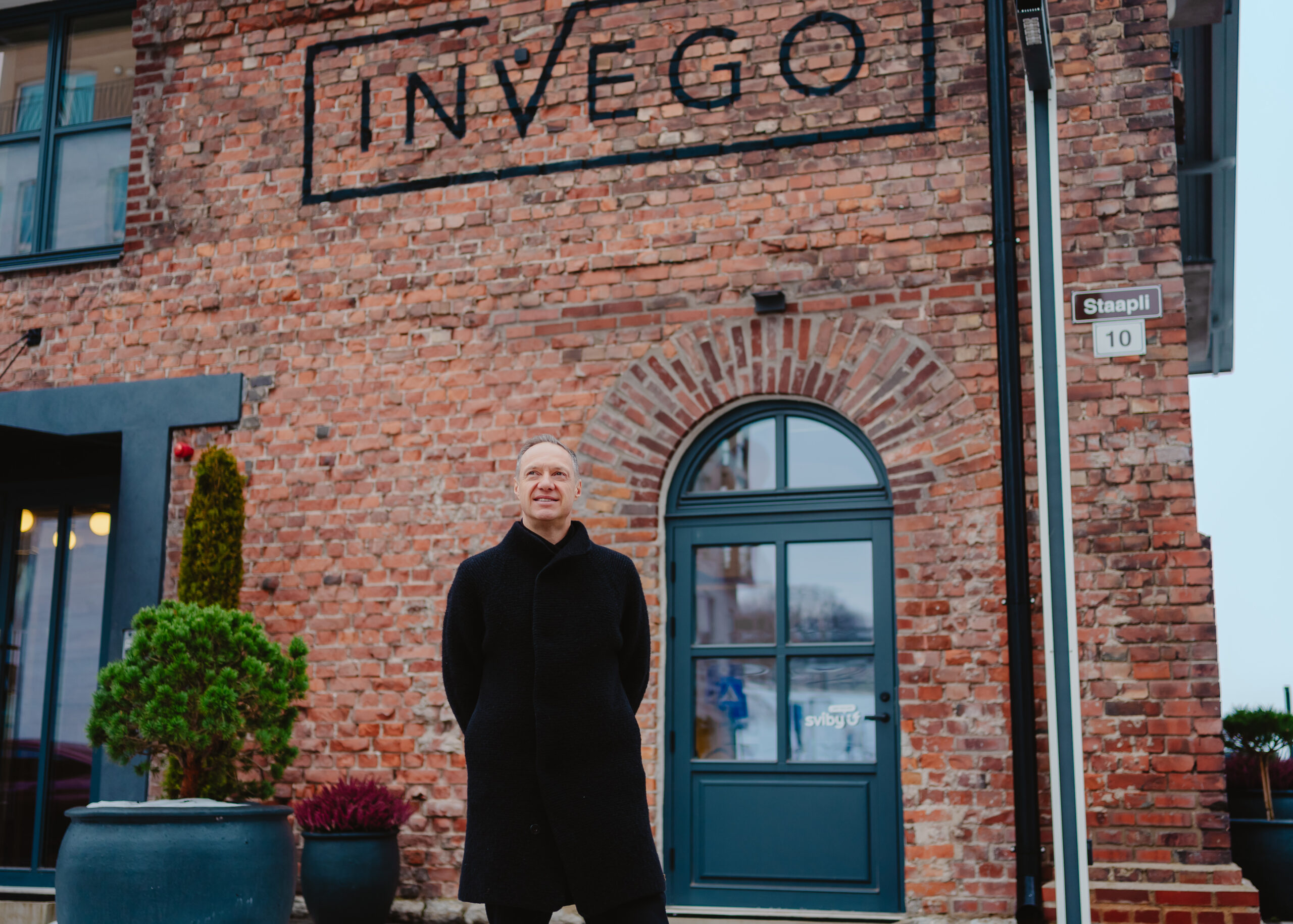
The year now coming to an end was, in many respects, a good one for Estonia’s real estate market, and at least five aspects of it will be remembered well into the future, says Kristjan-Thor Vähi, CEO of real estate developer Invego.
“Some people like to talk today about large inventories and weak buyer interest, but in reality it was a perfectly solid year. All things considered, I’d confidently give it a strong four-plus,” Vähi sums up the year.
Most important: Confidence has returned to the residential real estate market
“True, transaction volumes are still nowhere near the previous peak, but we have recovered very nicely from the interim downturn. In Tallinn, around 700 apartment transactions take place each month, which is already slightly above the historical average,” says the head of Invego.
He adds that the clearest proof of growing confidence is the volume of home loans, which increased by one billion euros in Estonia over the course of the year. “Homebuyers were active throughout the year, supported by wage growth and a stable interest-rate environment,” Vähi comments.
A national record for new office space in Estonia
“A total of nearly 100,000 square metres of new, high-quality office space — led by landmark projects such as Arter and Krulli Park. Estonia has never before seen such a powerful year in this sector,” Vähi emphasizes, adding with a smile that perhaps the last time Tallinn gained such a large amount of modern commercial space at once was some 45 years ago, just before the Olympic Games.
“The volume of office space in Tallinn has doubled over the past dozen years. Several large developments are currently underway, and as a result, older buildings will start to stand empty. The big question in the coming years is: what will happen to them? I’ve suggested that the city should actively encourage projects where old office buildings are quickly converted into new homes instead of becoming ghost castles,” says Vähi.
The hit product of 2025: A private home in a new terraced house
Instead of the semi-detached houses typical of previous years, more than 300 new terraced homes will be sold in Tallinn and Harju County this year, representing growth well in excess of 50%.
“Terraced houses are the hit product of 2025. In the Uus-Järveküla residential area alone, which we are developing in cooperation with EfTEN, we are selling nearly 40 new homes this year. At this pace, the development — originally planned to include165 homes by 2027 — is likely to be completely sold out by next summer,” Vähi illustrates.
A longer-term trend: People are increasingly moving out of Tallinn
According to Vähi, this trend is driven by more affordable prices, a calmer living environment, and steadily improving infrastructure. “The shift in mindset has taken place over a longer period, but by now there is also a growing realization that overall quality of life in new residential areas is simply much better,” he explains.
“While a nice renovation can do a lot within four walls, a new home is still a new home — standards are immediately higher, and for the next 15–20 years you can live without worrying about unexpected expenses. On top of that, you get a comprehensively planned, modern environment, from sidewalks and playgrounds to green areas and fitness trails. If you compare a new apartment, for example in Keila Pargikodud, with an older ‘panel district’ apartment in Tallinn in the same price range, it is actually very difficult to find arguments in favor of the latter,” Vähi confirms.
The year’s standout realization: Buying a home in Riga turned out to be almost a third cheaper than in Tallinn
Kristjan-Thor Vähi confirms that this is still very much the case, and the main reason lies in permitting timelines. “If in Tallinn and its surrounding areas bureaucracy can easily take ten years away from a developer, then in Riga the same process tends to take just a couple of years.” “Time is money, and over a longer approval process various costs accumulate, ultimately being reflected in apartment prices. If I understood correctly, the new mayor has promised to finally fix this issue. Understandably, this is in the interests of all residents of Tallinn,” Vähi says, looking forward to faster progress in the future.